Tile Leveling System Guide: Types, Installation & Professional Selection for B2B Buyers
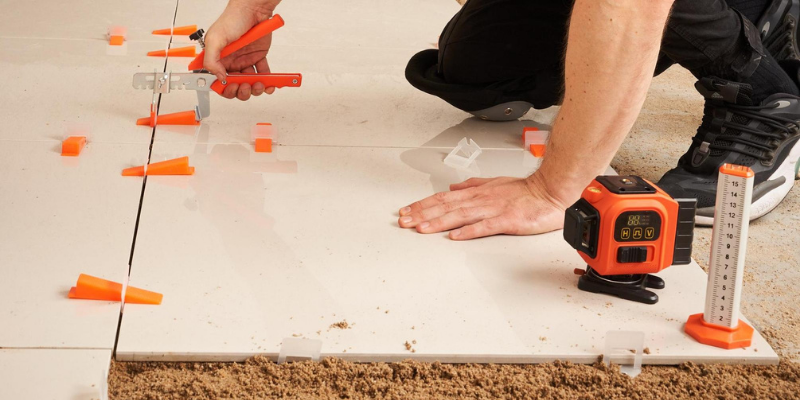
Why Lippage Ruins a Perfect Tiling Job
You've measured precisely, mixed the mortar to the right consistency, and laid each tile with care — but after the mortar sets, you run your hand across the surface and feel it: lippage. One tile edge sits higher than its neighbor. It's visually jarring, creates tripping hazards, and undermines the entire professional finish of the installation.
Lippage is the most common — and most frustrating — problem in both wall and floor tiling. It's especially prevalent with large format tiles (600×600mm and above), where even a 1mm height difference is visible and tactile.
The solution? A tile leveling system — a set of simple mechanical tools that apply uniform pressure across adjacent tiles while the mortar is still fresh, locking them into a perfectly flush plane.
This guide covers everything you need to know: how leveling systems work, the three main types on the market, how to choose the right one for your tiles, and a step-by-step installation workflow. Whether you're a professional tiler specifying tools for your crew or a distributor evaluating product lines, this is your complete reference.
What Is a Tile Leveling System & How Does It Work?
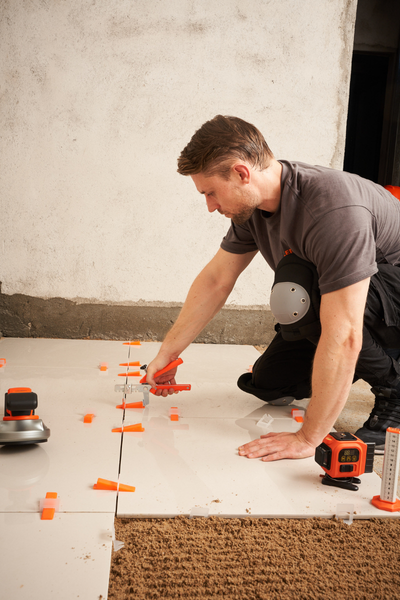
A tile leveling system is a temporary mechanical aid that holds adjacent tiles at the same height while thin-set mortar cures. The core principle is uniform compressive force: after tiles are laid, the system applies downward pressure on the higher tile (or upward pressure on the lower one), eliminating edge misalignment before the mortar sets.
The 3-Phase Workflow
- Place: After spreading mortar and laying a tile, insert the leveling component (clip, stud, or wedge) into the mortar joint before the mortar skins over.
- Tension: Engage the locking mechanism — push a wedge, screw a cap, or rotate a dial — to apply controlled pressure that pulls both tile edges into the same plane.
- Fix: Leave the system in place for 12–24 hours (follow mortar cure time recommendations). Once the mortar has set, remove the reusable components and snap off disposable clips below the tile surface. The grout joint is now perfectly flush.
The entire system is designed to be simple, fast, and reusable (for components that aren't buried in the joint). A professional tiler can level 30–50 m² per day with a well-designed system — a significant productivity boost over manual hand-pressure methods.
The 3 Main Types of Tile Leveling Systems
Not all leveling systems are created equal. The market has consolidated around three proven designs, each with distinct strengths.
1. Clip & Wedge System (Most Popular / Entry-Level)
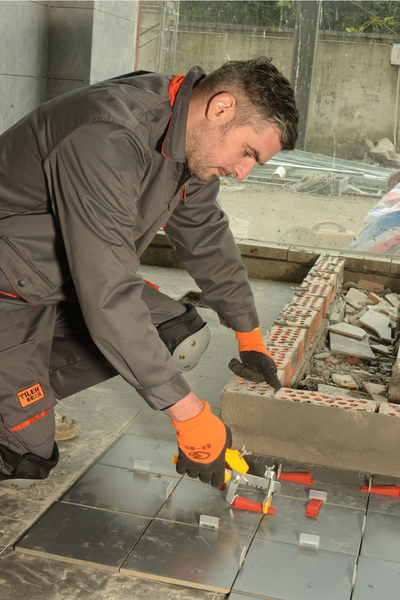
How it works: A flat plastic clip is inserted under the tile joint; a wedge is driven into the clip's slot to apply pressure. The clip portion below the tile surface is snapped off after curing.
- Lowest cost per installation (clips are disposable, wedges are reusable)
- Simple to learn — new crew members can be trained in minutes
- Works with tile thickness from 3mm to 12mm
- Minimal tool requirement (rubber mallet or wedge pliers)
- Wedges can pop loose if mortar is too wet or joints are too wide
- Single-use clips generate plastic waste
- Less precise adjustment compared to screw-type systems
Best for: Standard residential projects, 300×300mm to 600×600mm tiles, cost-sensitive professional crews.
🔧 TILER Clip & Wedge System — Tile Leveling Clips 8119-2P (secure, disposable) + Tile Leveling Wedges 8119-1P (reusable). Also available as a fully Recyclable Tile Leveling System 8119-8R (eco-friendly reusable clips & wedges) or as a complete kit 8119-8R(SET). Pair with 8119-8 Plier for fast, effortless tightening.
2. Stud & Cap System (Premium / Reusable)
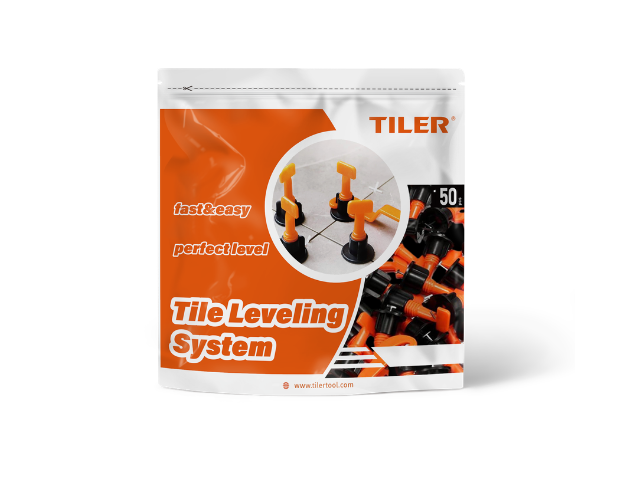
How it works: A reusable stud is placed in the joint; a threaded cap is screwed or pressed onto the stud to apply pressure. Both stud and cap are removed after curing and reused for the next installation.
- Fully reusable — lowest long-term cost for high-volume professional tilers
- More consistent tension (threaded adjustment is more precise than wedge friction)
- Caps distribute pressure over a wider area, reducing tile edge chipping
- Works with thicker tiles and stone (up to 20mm)
- Higher upfront investment (studs + caps cost more than clip packs)
- Slower to install than clip & wedge (threading takes more time per joint)
- Studs can interfere with very narrow grout joints (<2mm)
Best for: Professional tiling contractors, large-format tile installations, high-value residential and commercial projects where reusability matters.
🔧 TILER Recyclable Leveling System — Model 8119-8R offers an environmentally conscious alternative to disposable clips. Fully reusable clips and wedges reduce waste while maintaining professional-grade leveling performance. Available as a complete set 8119-8R(SET).
3. Rotating / Screw-Type System (Professional / Fine Adjustment)
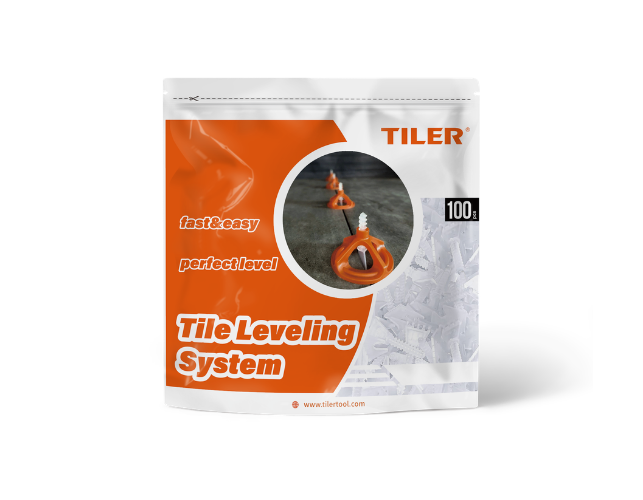
How it works: A base plate is placed under the joint; a rotating dial or screw mechanism applies precise, calibrated pressure. The dial allows micro-adjustment — you can feel the exact moment both tile edges are perfectly flush.
- Finest adjustment — dial/screw mechanism eliminates over-tightening
- Ideal for very large format slabs (1200×1200mm+) where precision is critical
- Reduces tile breakage (controlled torque vs. hammer-driven wedges)
- Professional appearance; favored by high-end installers
- Highest cost per installation
- Learning curve — requires practice to master dial tension
- Slower installation speed (precise adjustment takes more time per joint)
Best for: Premium commercial projects, stone slab installations, professional tilers specializing in large-format / high-value work.
🔧 TILER Screw-Type Leveling System — Tile Leveling Screw 8119-T1 with protective Caps 8119-T2 provides adjustable, precise tension control. Also available: Screw TPZ-01 + Caps TPZ-02. Threaded mechanism eliminates over-tightening and protects tile edges — ideal for large format and premium installations.
Quick Comparison Table
| Feature | Clip & Wedge | Stud & Cap | Rotating/Screw |
|---|---|---|---|
| Reusability | Clips: disposable / Wedges: reusable | Fully reusable | Fully reusable |
| Adjustment Precision | Low–Medium | Medium–High | Highest |
| Installation Speed | Fastest | Medium | Slowest |
| Cost per m² | Lowest | Medium | Highest |
| Best Tile Size | 300×300 – 600×600mm | 300×300 – 1200×600mm | 600×600mm+ |
| Tile Thickness Range | 3–12mm | 5–20mm | 6–25mm |
How to Choose the Right Leveling System
Selecting the right system depends on three factors: tile format, project scale, and budget.
1. By Tile Thickness
- Thin tiles (3–6mm): Clip & wedge only. Thinner tiles are more flexible and require gentle, evenly distributed pressure. Screw-type systems can over-tighten and crack thin porcelain.
- Standard tiles (6–12mm): All three systems work. Clip & wedge for speed; stud & cap for reusability.
- Thick tiles & stone (12–25mm): Stud & cap or rotating type. Heavier tiles need stronger, more calibrated holding force.
2. By Tile Size
- Small format (<300×300mm): Lippage is less visible; simple clip & wedge is sufficient.
- Medium format (300×300 – 600×600mm): Clip & wedge or stud & cap.
- Large format (600×600mm – 1200×600mm): Stud & cap strongly recommended; rotating type for premium jobs.
- Slabs (1200×1200mm+): Rotating/screw-type only. Precision is critical at this scale.
3. By Project Type
- DIY / Homeowner: Clip & wedge — lowest cost, easiest to learn.
- Professional tiler (residential): Stud & cap — reusable, professional finish, reasonable speed.
- Professional tiler (commercial / large format): Rotating type — precision justifies the time investment.
- Distributor / Retailer: Stock all three types. Clip & wedge drives volume; stud & cap drives margin; rotating type serves the premium segment.
Step-by-Step: Installing Tiles with a Leveling System
What You Need
- Trowel (6mm for walls, 10mm for floors)
- Thin-set mortar (follow tile manufacturer's recommendation)
- Leveling system components (clips/wedges, studs/caps, or rotating bases)
- Rubber mallet or wedge pliers (for clip & wedge systems)
- Tile cutter (manual or electric)
- Spirit level
The Workflow
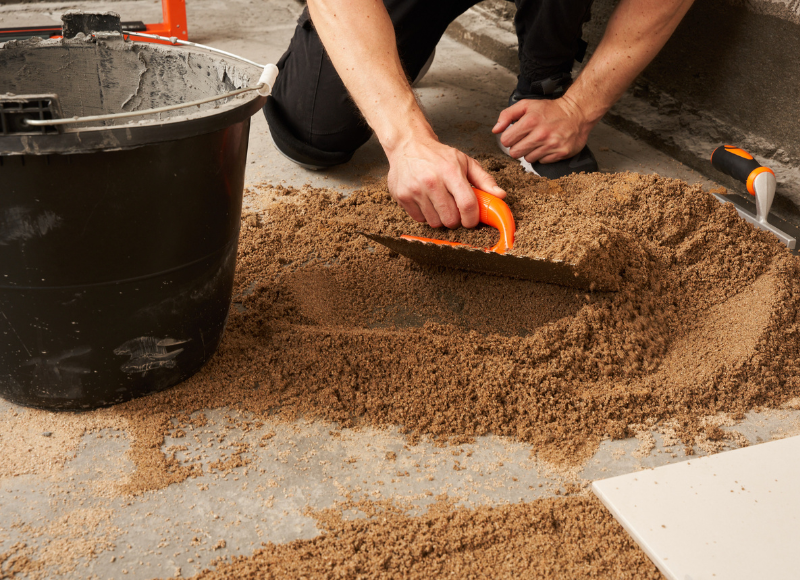
Use the recommended trowel size. Hold the trowel at a 45° angle and create uniform ridges. Don't over-water the mortar — weak mortar increases the risk of lippage.
Press firmly and twist slightly to bed the tile into the mortar. Use a spirit level to check plane in both directions.
Before laying the adjacent tile, insert the clip (or stud) into the joint so it sits flush with the tile surface. The component should be centered between the two tiles.
Spread mortar, press the second tile into place, and immediately engage the leveling mechanism (drive the wedge, screw the cap, or rotate the dial). Check that both tile edges are flush using your finger or a feeler gauge.
Continue across the section. Every 3–4 tiles, step back and check the overall plane with a long spirit level (1200mm or longer).
Allow mortar to cure per manufacturer's instructions (typically 12–24 hours). Do not walk on the tiles during this period.
Clip & wedge: Snap off clips below the tile surface using a rubber mallet. Collect and reuse wedges.
Stud & cap: Unscrew caps, lift out studs. Both are fully reusable.
Rotating type: Unscrew and lift the dial/base assembly.
Remove any mortar squeeze-out from the joints before it fully cures. Vacuum the joints before grouting.
Common Mistakes to Avoid
- Using the wrong trowel size — too small a trowel = insufficient mortar coverage = tile settles unevenly.
- Over-tightening — with wedge systems, driving the wedge too hard can lift the tile rather than leveling it.
- Inserting components too early — if mortar skins over before you engage the leveling mechanism, adjustment becomes difficult.
- Ignoring tile batch variation — even within the same product line, tile thickness can vary by ±0.5mm. Always dry-lay a few tiles first to check edge alignment.
- Reusing disposable clips — clips are designed for single use. Reusing them compromises holding force.
TILER Leveling System: Complete Product Line
TILER offers a full range of tile leveling solutions engineered for professional tilers and distributors. Manufactured in our 40,000 m² facility with ISO-certified quality control, exported to 130+ countries.
Tile Leveling Systems (Clips, Wedges & Screws)
| Model | Product Name | Type | Key Feature |
|---|---|---|---|
| 8119-2P | Tile Leveling Clips | Clip & Wedge | Secure and reliable, disposable clips for one-time use |
| 8119-1P | Tile Leveling Wedges | Clip & Wedge | Easy and convenient, reusable wedges for repeated use |
| 8119-8R | Recyclable Tile Leveling System | Recyclable System | Environmentally conscious, full system with reusable clips & wedges |
| 8119-8R(SET) | Recyclable Tile Leveling System Set | Recyclable System | Complete kit — everything needed in one box |
| 8119-T1 | Tile Leveling Screw | Screw Type | Adjustable and secure, fine-tune tension with precision threading |
| 8119-T2 | Tile Leveling Caps | Screw Type | Protective cover, ensures level tile surface without damage |
| TPZ-01 | Tile Leveling Screw | Screw Type | Adjustable and secure, alternative screw-style option |
| TPZ-02 | Tile Leveling Caps | Screw Type | Protective cover for TPZ-01 screw system |
| 8119-8 Plier | Plier for Tile Leveling | Accessory | Easy handling, tightens clips and wedges securely |
Tile Spacers & Shims
| Model | Product Name | Type | Key Feature |
|---|---|---|---|
| 8119-1U | Tile Horseshoe Shim | Horseshoe Shim | Sturdy and reliable, for precise tile alignment |
| 8119-F5 | 5 Size Recyclable Tile Spacer | Multi-Size Spacer | 5 sizes in one set, versatile and reusable |
| 8119-7 | Recyclable Tile Spacers for Joint | Joint Spacer | Environmentally friendly, perfect for joint alignment |
| 8119-4 | Recyclable Tile Spacers for Joint | Joint Spacer | Reusable design, suitable for joint alignment |
| 8119-6 | Hollow Tile Spacers for Joint | Joint Spacer | Improved air circulation, ideal for mortar flow |
| 8119-3 | X-Type Tile Spacers for Joint | Joint Spacer | Precise alignment, perfect for cross-joint applications |
Why Choose TILER Leveling Tools
- Three system types — Clip & Wedge (8119 series), Recyclable System (8119-8R), and Screw Type (8119-T / TPZ series) — covering every installation scenario
- Full spacer range — Horseshoe shims, multi-size packs, recyclable and hollow designs for every joint width
- Recyclable & eco-friendly options — 8119-8R and 8119-7/4/6 series reduce plastic waste
- Complete accessories — Dedicated pliers (8119-8 Plier) for efficient clip and wedge tightening
- OEM/ODM support — custom packaging and labeling for distributors worldwide
- 28+ years of tile tool manufacturing expertise — trusted in 130+ countries
Maintenance & Storage Tips
Proper care extends the life of reusable leveling components:
- Clean after each use: Remove mortar residue with a stiff brush and water. Dried mortar can interfere with threading/snapping mechanisms.
- Store in a dry place: Plastic components can become brittle if stored in direct sunlight or freezing temperatures.
- Inspect before reuse: Discard any studs or caps with cracked threads or deformed contact surfaces.
- Separate by type: Keep clip & wedge components separate from stud & cap systems to avoid mix-ups on the job site.
Conclusion: The Right System Makes the Difference
Lippage is preventable — and a tile leveling system is the most cost-effective tool to ensure a professional, flush finish on every job. For standard residential work, a clip & wedge system delivers speed and economy. For professional crews installing larger formats, a stud & cap system offers the best balance of reusability and performance. For premium large-slab installations, a rotating/screw-type system delivers the precision that high-value projects demand.
At TILER, we manufacture all three system types with the same rigorous quality standards that have made us a trusted partner to 130+ countries worldwide. Whether you're a professional tiler looking to upgrade your toolkit or a distributor seeking a reliable product line, our leveling systems deliver consistent, professional results.
Ready to eliminate lippage from your tiling projects?
💬 Contact Our Team for Distributor Pricing → ▶ Watch Installation Video: Clip & Wedge System in Action →TILER — Make Tiling Easy. 28+ years of professional tile tool manufacturing. 40,000 m² factory. 130+ countries served.