Why Tiled Floors Lift in the Middle — and How to Stop It
Why Tiled Floors Lift in the Middle — and How to Stop It
A floor can pass inspection and still lift six months later. It is usually not the tile's fault — the floor simply had no room to move.
01The problem: the floor is boxed in
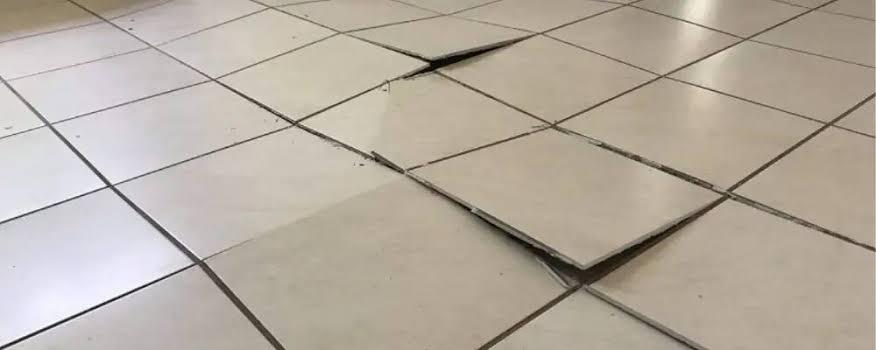
You finish a floor. Everything is flat, the lines are straight, the client pays. Months later a corner lifts in the middle of the room, and the grout lines crack in a dead straight row.
Installers call this tenting: the floor pushes against its own edges — tight against every wall, every joint filled with hard grout — and the pressure has only one way to go: up.
02Why it happens
Tiles barely move. But everything around them does — a few millimetres, every day:
- Sun and heat. Tiles expand warm, shrink cool — daily, forever, especially near big windows.
- Underfloor heating. The whole floor heats and cools every day, all year round.
- New concrete keeps shrinking for months, even under the tiles.
- The building moves. Slabs crack where they are designed to crack.
Each one is tiny. But if the floor is boxed in, they add up — and the tile loses.
03The fix: give the floor room to move
Movement joints are soft, sealant-filled gaps that absorb the movement. Three kinds, three jobs:
- Perimeter joints — where tiles meet walls, columns and cabinets. Lets the whole floor breathe; the skirting hides it.
- Field joints — straight lines across big floors, splitting them into panels, every few metres.
- Structural joints — directly above a joint in the concrete slab. Never cover one.
- 1Fill movement joints with flexible sealant only. Never grout — grout sets hard and pushes the stress back into the tile.
- 2Never grout tight against a wall. That gap is doing a job, even when the skirting hides it.
04The bottom line
Plan the joints before the tile. Keep the wall gap clean. Fill the joints with sealant.
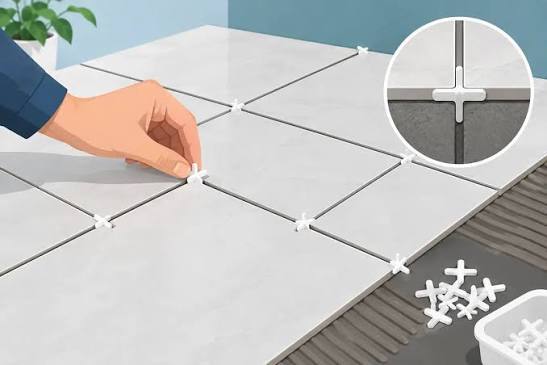
Straight lines start with the right spacers
TILER tile spacers and leveling tools hold the joint width from the first tile to the last — on floors, walls and large-format slabs.
See the range